 By Newell Jay
Keeping a cat indoors is one of the most effective ways to ensure a long, healthy, and safe life. Indoor cats are shielded from numerous external hazards, including vehicular traffic, predators, infectious diseases, and toxic substances. Statistical data consistently demonstrates that indoor cats live significantly longer lives on average compared to their outdoor counterparts.
However, an indoor lifestyle presents its own unique set of challenges. Without the natural stimulation of the outdoor world, a confined environment can quickly become predictable and monotonous. This lack of environmental complexity often leads to boredom, physical inactivity, and stress. In turn, a chronically under-stimulated cat may develop behavioral and health issues, such as obesity, urine spraying, compulsive grooming, or redirected aggression. Providing a fulfilling indoor life requires a deliberate strategy focused on environmental enrichment and comprehensive care.
Understanding the Feline Instinctual Needs
To create an optimal indoor environment, you must first look at your home through the eyes of a feline predator. Even though cats have been domesticated for thousands of years, their core biological drives remain virtually identical to those of their wild ancestors. They possess deeply ingrained instincts to hunt, stalk, pounce, climb, scratch, and patrol a dedicated territory.
When these natural behaviors have no appropriate outlet within the home, cats do not simply stop experiencing the urge to perform them. Instead, they redirect these behaviors toward inappropriate targets. A cat that lacks a proper scratching post will target the living room sofa. A cat with an unfulfilled hunting drive might stalk and pounce on its owner’s ankles. Enrichment is not a luxury or a collection of optional bonuses; it is a fundamental pillar of basic feline welfare.
Maximizing Vertical Space
In the wild, felines utilize the three-dimensional architecture of their environment to navigate safely, observe prey, and avoid larger predators. Indoor cats share this intrinsic desire for elevation. A home that feels small at ground level can be vastly expanded by opening up the vertical dimension.
The Benefits of Height
High vantage points provide cats with a profound sense of security. From an elevated position, a cat can survey its entire territory, monitor household activity, and feel safe from potential disruptions like vacuum cleaners, children, or dogs. For multi-cat households, vertical territory is essential for maintaining peace, as it allows individual cats to establish a clear hierarchy and maintain comfortable physical distance from one another.
Implementing Vertical Solutions
-
Cat Trees and Towers: Invest in tall, sturdy cat trees that feature multiple tiers, resting platforms, and integrated scratching elements. Ensure the base is heavy enough to prevent wobbling when a large cat leaps onto it.
-
Wall-Mounted Shelves: Specially designed feline wall shelves allow you to create elevated highways around the perimeter of a room. Arrange them in a stepped configuration so aging or less athletic cats can navigate them safely.
-
Window Perches: Installing a secure, padded perch on a sun-drenched window sill offers a perfect location for resting and observing the outside world.
Simulating the Predatory Chase Through Play
Cats are obligate carnivores engineered for short, explosive bursts of energy spent tracking and capturing prey. Replicating this predatory cycle through structured play is critical for maintaining physical fitness and mental sharpness.
Structured Interactive Play
Passive toys, such as standalone plastic mice or balls left scattering across the floor, quickly lose their novelty. To truly engage a cat, you must bring the toy to life. Use wand toys, feather teasers, or fleece ribbons to mimic the unpredictable movements of birds, rodents, or insects.
When conducting a play session, let the toy move away from the cat, hide behind corners, or rustle beneath a piece of paper. Allow your cat to track, stalk, and make successful captures throughout the game.
The Importance of the Completion Routine
Always end an intense interactive play session by allowing your cat to catch the toy definitively. Immediately follow this final capture with a meal or a high-quality treat. This sequence satisfies the biological chain of hunting, catching, killing, and eating. It triggers a profound sense of satisfaction and induces a natural relaxation state, prompting the cat to groom themselves and settle down for a restful nap.
Nutritional Enrichment and Puzzle Feeders
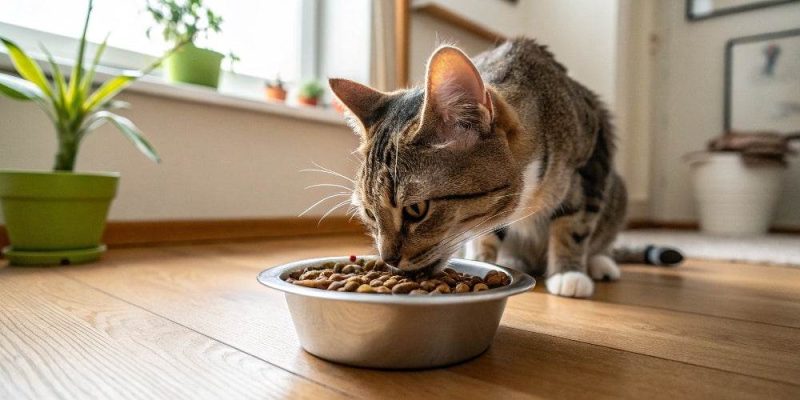
In a traditional household setting, food is delivered in a bowl at predictable intervals, requiring zero effort from the cat. This eliminates the mental problem-solving that occupies a significant portion of a wild feline’s waking hours.
Moving Away from the Bowl
Nutritional enrichment involves making your cat work for their food. This simple change slows down rapid eating, prevents regurgitation, and keeps their mind active.
-
Stationary Puzzle Feeders: These plastic or silicone trays feature mazes, cups, or pegs. Cats must use their paws to navigate the kibble through the obstacles to eat it.
-
Mobile Dispensing Toys: Egg-shaped or spherical toys roll across the floor, dispensing individual pieces of kibble only when nudged or kicked in a specific direction.
-
Hidden Foraging Cups: Hide small, small portions of food in various locations around the house, encouraging your cat to use their acute sense of smell to patrol and forage for their meals.
Satisfying Olfactory and Tactile Senses
An indoor environment can become sensory-deprived over time. Introducing novel textures and scents keeps the feline brain engaged with its surroundings.
Appropriate Scratching Surfaces
Scratching is a multi-purpose behavior. It allows cats to shed the dead outer layers of their claws, stretch their shoulder and spinal muscles, and leave behind visual and olfactory markers through scent glands located in their paw pads.
Provide both vertical and horizontal scratching options. Materials matter greatly; some cats prefer the rough texture of sisal rope, while others prefer corrugated cardboard or natural wood. Ensure vertical posts are tall enough for your cat to fully extend their body when stretching.
Scent Enrichment
Introduce safe, novel scents into the home to stimulate your cat’s curiosity. Catnip is a classic choice, but not all cats possess the gene required to react to it. For those that do not, silver vine or valerian root often elicit a similar, highly pleasurable response. You can also bring outdoor elements inside, such as clean autumn leaves, large pinecones, or pieces of turf, allowing your cat to investigate new natural odors safely.
Basic Indoor Care and Environmental Management
Beyond psychological enrichment, daily physical management ensures your indoor cat remains in peak physical condition.
| Care Component | Target Frequency | Primary Purpose |
| Litter Box Maintenance | Scooping twice daily, washing monthly | Prevents aversion, tracks urinary health |
| Nail Trimming | Every two to three weeks | Prevents painful overgrowth and snagging |
| Hydration Management | Constant access, daily water changes | Protects renal health, prevents crystals |
| Coat Brushing | Two to three times weekly | Minimizes hairballs, reduces dander shedding |
Litter box management is particularly critical in an indoor environment. The baseline rule is to provide one more litter box than the total number of cats in the home. Keep these boxes distributed in quiet, low-traffic areas with clear escape routes, avoiding tight corners where a cat might feel trapped by other household members.
Conclusion
An indoor lifestyle is undeniably the safest choice for a domesticated cat, but it requires human intentionality to make it a truly rewarding one. By transforming your living space into a dynamic environment that honors feline instincts, you eliminate the risks of the outdoors while preserving the mental and physical vitality your cat deserves. Through dedicated vertical territory, interactive hunting simulations, puzzle feeding, and meticulous daily care, your indoor companion will thrive throughout a long, vibrant life.
Frequently Asked Questions
What is a catio, and is it necessary for an indoor cat?
A catio is an enclosed outdoor patio designed specifically for felines. It connects to a house window or door, allowing indoor cats safe access to the outdoors without the risk of wandering away or encountering predators. While it is not strictly necessary if you provide sufficient indoor enrichment, a catio is an exceptional addition that offers unparalleled visual, auditory, and olfactory stimulation from the safety of a secure mesh structure.
How can I safely harness-train an indoor cat for outdoor walks?
Harness training requires a slow, step-by-step approach utilizing positive reinforcement. Start indoors by letting your cat sniff the harness, rewarding them with treats. Gradually progress to buckling the harness for a few seconds at a time while offering high-value food. Once they walk comfortably indoors with the harness and leash attached, you can transition to a quiet, secure outdoor space, allowing the cat to dictate the pace of the walk rather than pulling them like a dog.
Why does my indoor cat suddenly run frantically through the house at night?
These sudden bursts of nighttime activity, often referred to as the zoomies, are typically an expression of pent-up physical energy. Because cats are naturally crepuscular, meaning they are most active during dawn and dusk, they experience biological energy surges at these times. If they have spent the entire day sleeping without sufficient physical or mental stimulation, they will discharge that stored energy by running and jumping wildly around the home.
Can indoor cats get fleas, ticks, or heartworms?
Yes, indoor cats are still susceptible to external parasites. Fleas and ticks can easily enter a home on human clothing, shoes, or via other household pets that go outside. Mosquitoes, which transmit deadly heartworm disease, can easily slip through open doors or window screens. Because of these persistent risks, veterinarians universally recommend keeping indoor cats on year-round parasite preventative medications.
How do I stop my indoor cat from constantly begging for food?
Constant begging is often a sign of boredom rather than true hunger. When a cat learns that crying results in human attention or food, the behavior is reinforced. To break this cycle, ignore the begging completely and transition away from traditional bowl feeding. Utilize puzzle feeders and automated dispensers to dissociate your physical presence from the delivery of food, and redirect their requests for attention into interactive play sessions.
My cat keeps chewing on my indoor houseplants. How can I stop this safely?
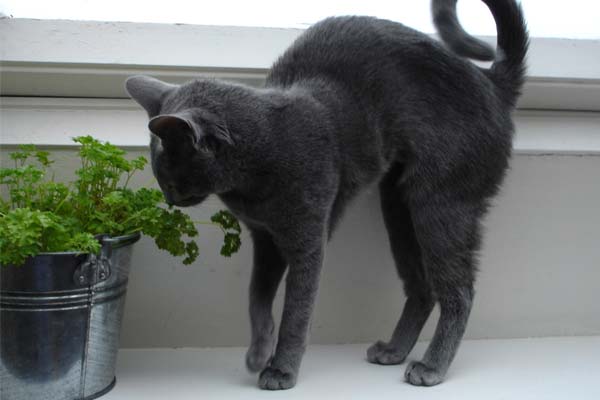
Cats often chew on plants to add roughage to their diet or simply out of curiosity. First, audit your home to ensure all your plants are strictly non-toxic, as common varieties like lilies are fatally poisonous to felines. To redirect this behavior, provide a designated tray of fresh, safe cat grass (usually grown from oat or wheat seeds) that your cat is allowed to chew on, and move your decorative houseplants completely out of their reach.